
There is a difference between catering a wedding and being a professional wedding caterer, and couples usually only discover it after the fact. Anyone can bring food to a wedding. A professional wedding caterer brings a system built around the realities of a wedding day — a timeline that bends around a ceremony, a service crew trained for the most photographed meal of your life, and a kitchen that can plate to a standard while 100 people wait. This is what professional wedding catering actually means, and why it is the variable that most determines how the food at your wedding is remembered.
What Professional Wedding Catering Includes
It Starts With the Timeline, Not the Menu
A wedding is not an event with food attached; it is a day with a food experience woven through it. Professional wedding catering begins with the run of show: ceremony, cocktail hour, dinner, toasts, dancing. The menu is built to fit that spine, not the other way around. The salad course plates the moment guests sit. The appetizer course times to the space between seating and the entrée. The entrée lands after toasts, not during them. When a caterer treats the timeline as the primary document, the meal feels like part of the day. When they treat the menu as primary, the meal fights the day.
A Professional Plated Dinner Timeline
| Time | Moment | Kitchen Action |
|---|---|---|
| 3:00 pm | Catering arrives | Cook line and plating station set up |
| 5:00 pm | Ceremony begins | Mise en place finishes; kitchen goes quiet |
| 6:00 pm | Cocktail hour | Optional appetizer stations pass |
| 7:00 pm | Guests seated | Salad course plates out immediately |
| 7:20 pm | Mid-dinner | Appetizer course (if 2+ courses) |
| 7:45 pm | Main | Entrée course served after toasts |
| 8:30 pm | Dancing opens | Kitchen breaks down; dessert staged |
| 9:00 pm | Dessert | Final course (if 3-course) |
Plated Service, Done Professionally
Plated wedding catering is the most demanding format we offer, and it is where professional catering earns its name. Each guest receives a composed plate, courses are timed across the whole room, and dietary alternatives are plated separately and delivered at the same moment as the standard course so no one feels singled out. Doing this for 80 guests requires a dedicated server per roughly 20–25 guests and a cook line that can hold plating quality across volume. That ratio is not a luxury; it is the floor below which plated service starts to feel rushed and cold.
We offer three course levels, each adding time and depth: a focused one-course at $100 per person, the two-course at $150 that is the sweet spot for most receptions, and the full three-course tasting menu at $200. The salad is always included and is not optional — it sets the table and gives the meal a beginning. The $1,000 minimum exists because bringing a full plated-service operation on site has a fixed cost that does not change whether you have 8 guests or 80.
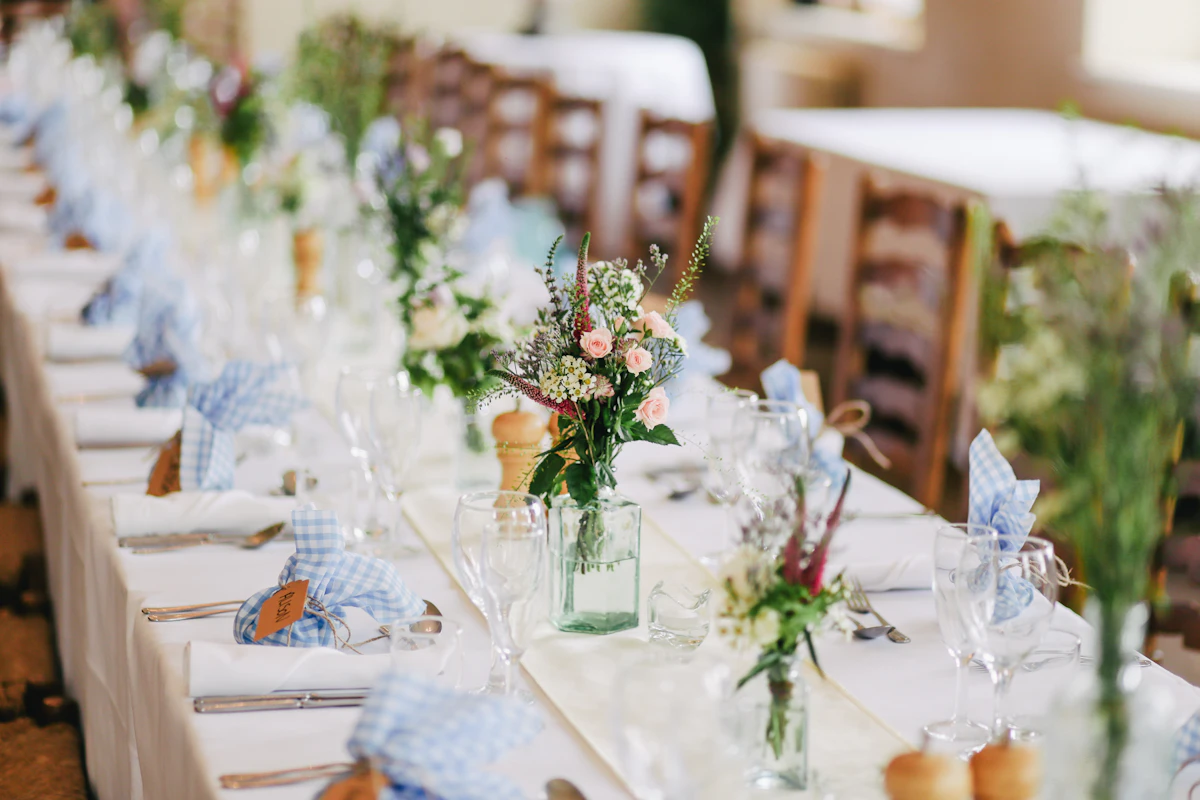
The Service Crew
A professional wedding caterer brings a trained crew, not a staffed-up headcount. Our servers know how to clear without intruding, how to deliver a dietary plate without announcing it, and how to read a room that is moving from dinner to dancing. The difference between a server and a trained server is invisible until something goes slightly sideways — a spill, a delayed course, a last-minute allergy — and then it is the entire experience. We staff to the service style, not to a flat number, because understaffing is the most common cause of a reception that feels off.
Dietary Needs, Handled Quietly
Professional wedding catering treats dietary needs as part of the plan, not a reaction. Gather them through the RSVP, separate allergies from preferences, and plate alternatives at the same moment as the standard course. A guest who cannot eat the entrée remembers that for years; a guest who was quietly accommodated remembers it warmly. The format matters too — a taco bar handles most dietary diversity naturally through self-assembly, while a plated dinner requires deliberate alternative plating. Either way, the standard is that no guest is singled out and no one waits.
- Collect allergies (safety) and preferences (courtesy) separately on the RSVP.
- Plate dietary alternatives separately and deliver simultaneously with the course.
- For taco bars, set a dedicated gluten-free section with separate tongs for celiac safety.
- Label stations clearly so guests self-direct without asking.
The Tasting: Professional, Not a Buffet
We offer tastings for plated private dining weddings, and a professional tasting is not a buffet. It is a focused session where we cook two or three entrée options and one or two appetizer options for the couple, in a format that mirrors the actual service. This is the moment to finalize dishes, adjust seasoning, and see how the courses flow. Book it four to eight weeks before the wedding — early enough to adjust, late enough that the guest count is firm. The tasting is included in the private dining package; there is no separate fee.
The most photographed meal of your life
Wedding food is documented more than any other meal you will ever serve. A professional wedding caterer treats plating, timing, and service to that standard — because the food is not just eaten, it is photographed, shared, and remembered for years.
Rehearsal Dinners: The Underrated Opportunity
The rehearsal dinner is the night before, the pressure is lower, and it is the first time both families sit down together. This is where a taco bar shines — it breaks the ice, it is casual enough that no one feels stiff, and at $15 per person it is dramatically less than the wedding-day plated dinner. Many couples spend their entire catering budget on the wedding day and do takeout for the rehearsal. Balancing the two — a taco bar rehearsal plus a plated wedding — makes the whole weekend feel intentional and often costs less than couples expect.
Booking Lead Time and Why It Matters
We cook up to five events per day, and professional wedding catering needs lead time for a reason: the concept conversation, the menu drafts, the tasting, and the run of show all take weeks. Six months out is the comfortable booking window; inside three months we can often still make it work, but the refinement window shrinks. The earlier we start, the more the menu becomes yours rather than a package applied to your day.
If you are planning a wedding in the Inland Empire, share your date, guest count, and the vibe you are going for. We will build the format, the menu, the timeline, and the service crew around it — so the food is the part of your wedding day you stop worrying about.
Planning a wedding? Share your date, guest count, and vibe — we will build professional plated service around your day.