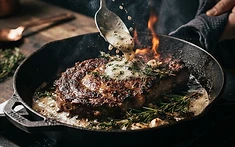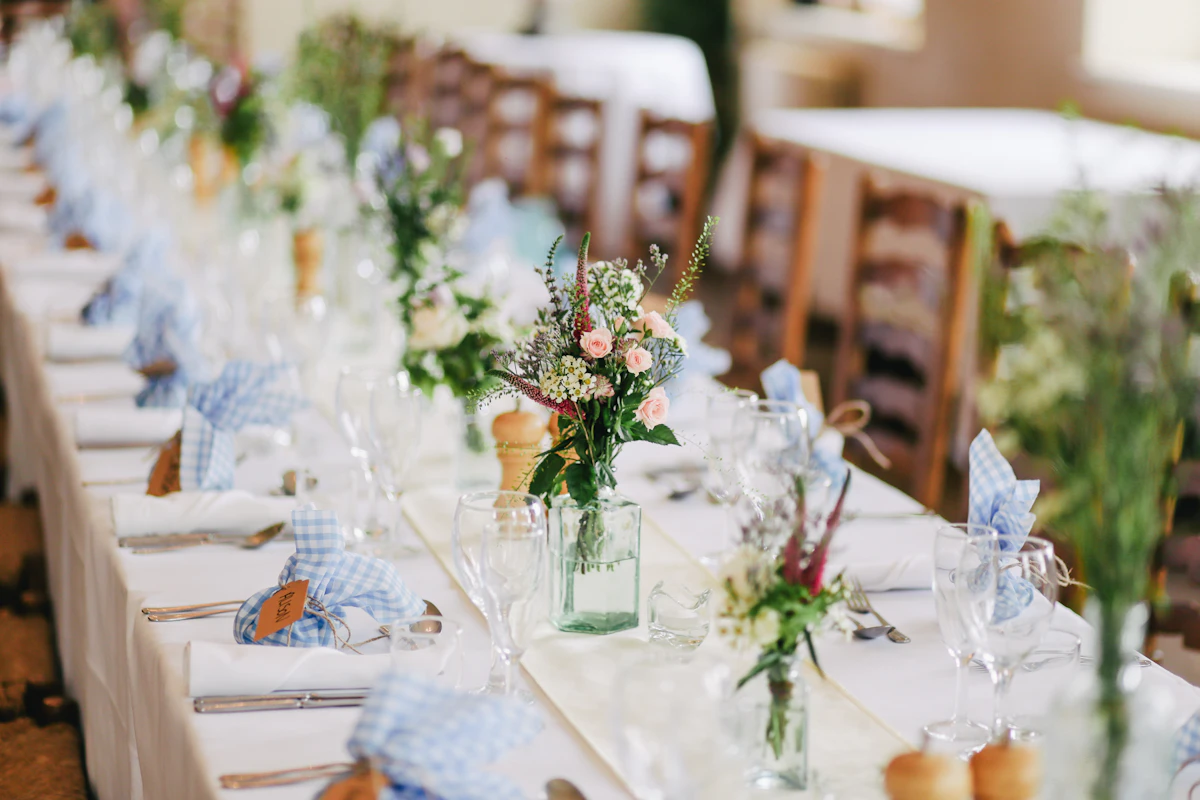

Culinary excellence at a single table is a craft. Culinary excellence at scale — holding that same standard across 80 or 100 guests — is a different discipline entirely, and it is the one most catering never actually attempts. The default in this industry is to trade quality for volume: cook ahead, hold in chafing dishes, serve food designed to survive rather than to shine. Excellence in catering and cuisines means refusing that trade and engineering the operation so fine-dining quality survives the scale. That is the standard On The Spot was built around, and this is what it actually takes to hit it.
Excellence at Scale
What Culinary Excellence Actually Means
Culinary excellence is not a single ingredient or a single technique. It is the combination of sourcing, craft, and freshness held to a standard that does not slip. Sourcing means proteins raised for flavor, produce picked at peak, ingredients chosen for what they are. Craft means sears that develop real crust, sauces reduced to the right consistency, seasoning balanced so a dish tastes alive. Freshness means the gap between cooking and eating is minutes, not hours. When all three hold, a dish is excellent. When any one slips, the dish is merely present — and most catering is merely present.
"Cooking brings me the type of satisfaction people can go their entire lives without feeling a glimpse of."
Why Scale Usually Destroys Excellence
The reason most catering does not reach excellence is structural, not effort. The standard model cooks food in a central kitchen, transports it, and holds it hot for hours. Every step in that chain degrades the things that make food excellent: crusts soften, sauces break, proteins overcook, bright flavors dull. The model is optimized for logistics, not for quality, so quality is engineered to survive the logistics rather than to shine on the plate. At scale this becomes visible fast — a dish that would be excellent for four people becomes mediocre for eighty because the holding time multiplies the damage.
How Quality Behaves: Held vs. Cooked-to-Order
| Quality Factor | Held (standard catering) | Cooked to Order (OTS) | At 80 Guests |
|---|---|---|---|
| Crust & sear | Softens within minutes | Fresh off the heat | Holds across the room |
| Sauce integrity | Breaks or tightens | Finished in the pan | Consistent plate to plate |
| Flavor brightness | Dulls over hold time | Layered and alive | Same as a 4-top |
| Plating | Collapses in transport | Composed to order | Standard holds at volume |
How We Hold Excellence Across Volume
The single decision that protects excellence at scale is cooking on site, to order, without chafing dishes. Because the food is not held, every quality factor that holding would damage is instead preserved. Crusts come off the grill minutes before plating. Sauces are finished in the pan, not pooled. Plating is composed per plate, not slid from a warmer. Volume is absorbed by a cook line built for it — induction surfaces, portable grills, a real mise en place station — and by staffing sized to the service style so plating quality does not slip under pace.

Cuisines: Range Without Dilution
Excellence across cuisines is a related discipline. A broad menu is easy to print and hard to execute well; range only counts when every cuisine on it is held to the same standard. We work from a core repertoire where each dish has been cooked thousands of times — Italian gnocchi and vodka pasta, Mexican al pastor and surf-and-turf tacos, American steak and lemon-butter chicken, hibachi-style steak and chicken, Cajun pasta. Range is not the ability to list these dishes; it is the ability to plate any of them to the same standard under pressure. That is what lets a custom menu span cuisines without diluting quality.
- Italian: four-cheese gnocchi, vodka pasta, free-range chicken alfredo.
- Mexican: al pastor, skirt steak and shrimp tacos, fajitas, fiesta night taco bars.
- American: peppercorn filet, lemon-butter chicken, bone-in pork chop, surf and turf.
- Asian-leaning: New York steak and chicken hibachi with fried rice and scallions.
- Cajun: range-free chicken pasta with chipotle and garlic.
The Five-Events-a-Day Ceiling
We cap at five events per day, and that cap is an excellence decision, not a scheduling one. Quality at scale requires attention, and attention is finite. A kitchen that tries to cover six or more events in a day is a kitchen that has started trading quality for volume — the exact trade excellence refuses. The ceiling is how we keep the standard from slipping as demand grows. It is also why booking lead time matters: the quality ceiling means popular dates fill, and the dates that remain are the ones where the standard can still be fully delivered.
Excellence is an operating decision, not a marketing word
Any caterer can claim excellence. The ones who deliver it have made operating decisions that protect it — cooking on site, refusing chafing dishes, capping daily volume, sizing staff to service style. Excellence shows up in the choices a caterer makes when no one is watching, and it lands on the plate whether the room has 8 guests or 80.
What It Looks Like for Your Event
For a host, excellence in catering shows up as a meal that does not feel like catering. The food tastes like it came from a restaurant, not a warmer. The plating looks intentional, not assembled. The service feels paced, not rushed. And the whole thing feels easy — because the work that makes it easy was done before the event, in the operating decisions that protect the standard. That is the experience whether the event is a 12-person private dinner or a 120-person reception.
If you want an event where the food is held to a culinary standard rather than a logistical one — across cuisines, across volume, across the whole room — tell me what you are planning and I will build the menu and the operation to deliver it.
Want culinary excellence that holds across your whole event — not just the first plate? Tell us about your event and we will build to the standard.